

- Bank
- Nepal bank — details shared on enquiry
- Account name
- Bodhidham Yoga School and Spiritual Retreat
- Account number
- Provided on booking confirmation
- SWIFT
- Provided on booking confirmation
- Branch
- Pokhara, Nepal
Nature Yoga Retreat in Nepal
Duration3 days / 2 nights
Group capSmall group
IncludedAll-inclusive
Overview
Nature Yoga Retreat in Nepal — 3 Days / 2 Nights
This is a short, simple retreat, three days and two nights, for a quick reset without taking much time off. It pairs daily Hatha yoga and guided meditation with satsang, spiritual discussion, in a calm natural setting above Pokhara. You arrive in the afternoon, settle in with a cup of tea, and are practising by the following morning.
It is gentle and suitable for all levels, including beginners. With views over the Annapurna range and the Pokhara valley, it is an easy retreat to add to a longer trip in Nepal. The ashram sits at 1,320 metres in the Gurung farming village of Ghachowk, about thirty minutes by road above the lake, so you get the mountains and the quiet without a trek to reach them. Everything is included once you arrive: your room, three vegetarian meals a day, every session, and the pickup from Pokhara. Mat, blanket, and bolster are provided, so there is nothing to carry up.
Why Nature Yoga Retreat?
A short three-day retreat, easy to fit into a wider trip
Daily Hatha yoga and guided meditation, suitable for all levels
Satsang, open spiritual discussion, for those who want it
A calm natural setting with views of the mountains, and the valley
Vegetarian meals eaten with that view
A small group and an unhurried pace
2 nights on the ashram, daily meals, and pickup from Pokhara
Walking trails from the ashram gate into forest and neighbouring villages
Ayurveda Massage & Sound Healing
Retreat Overview
The 3-day Nature Yoga Retreat at Bodhidham, in Ghachowk near Pokhara, is a short and simple retreat for anyone who wants a brief reset in a natural setting. Over three days and two nights, it combines daily Hatha yoga, guided meditation, and satsang with rest and good food, in a quiet spot above the Pokhara valley.
The yoga is classical Hatha, covering warm-ups, asana, breathing, and relaxation, and is suitable for any level. Guided meditation gives a calm close to the day, and satsang offers an open, informal space for spiritual discussion for those who want to take part. Meals are vegetarian and eaten with views over the Annapurna range. Because it is short, this retreat suits a first taste of ashram life, a weekend away, or an addition to a longer trip in Nepal. For a deeper or longer stay, the week-long retreats give more time.
What the retreat includes:
- Hatha yoga. Daily classical yoga sessions, with warm-ups, asana, breathing, and relaxation, suitable for all levels.
- Guided meditation. Calm, guided sessions to settle the mind.
- Satsang. An informal, open space for spiritual discussion, to take part in as much or as little as you like.
- Vegetarian meals. Simple sattvic food, eaten with views of the mountains, Phewa Lake, and the valley.
- Walking country. Trails from the ashram gate into forest, terraced farmland and neighbouring Gurung villages, with guidance on which walk fits the time you have.
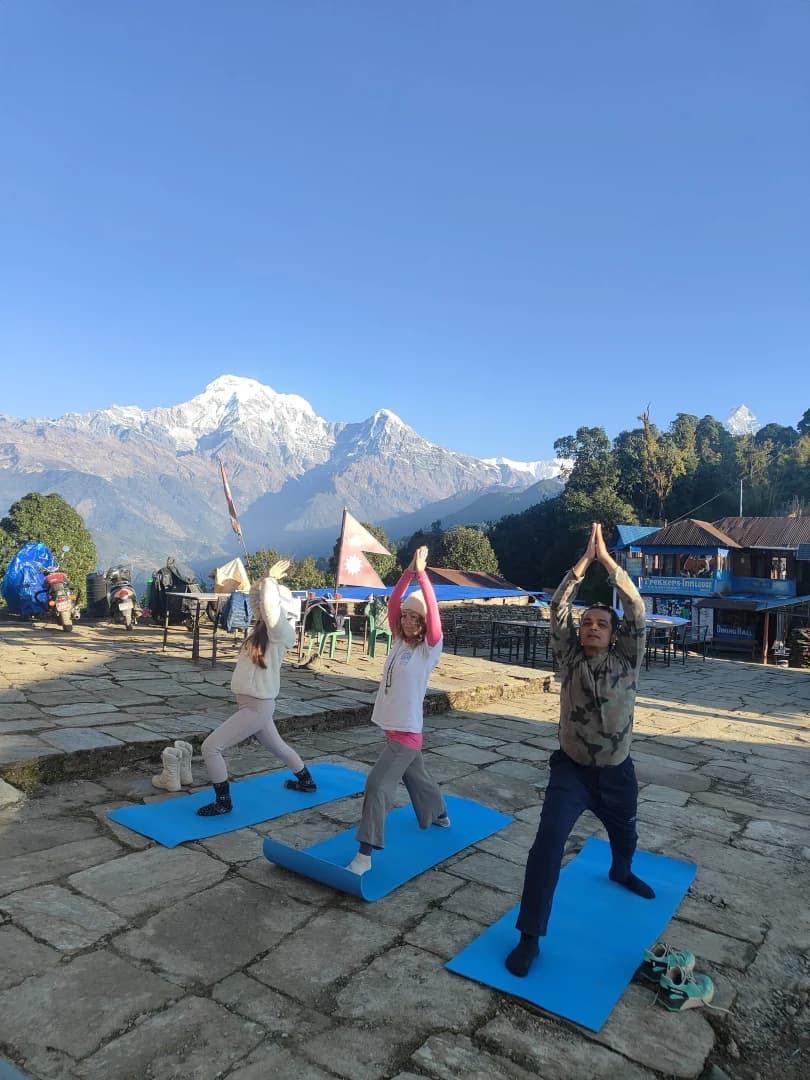
- Outdoor sessions. Practice moves outside whenever the weather allows, onto open ground above the ashram facing the Annapurna range.
Why we call it a nature retreat
The ashram stands where it does on purpose. Ghachowk sits on a shelf of hillside, and the land arranges itself around the buildings in a way that suits practice almost perfectly.
- Terraced farmland drops away below, rice and millet in long curving steps
- Oak and rhododendron forest climbs the ridge above the highest fields
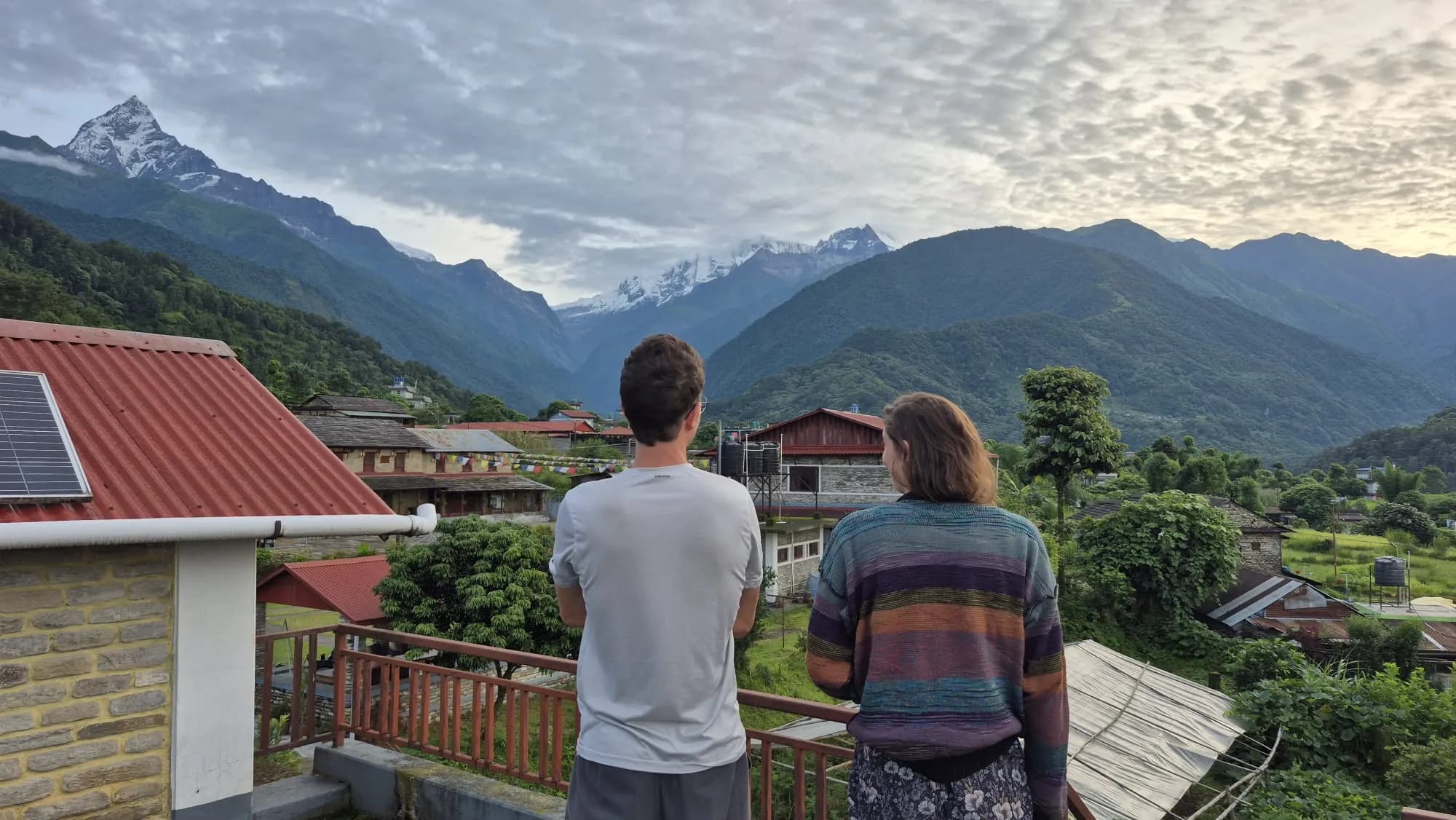
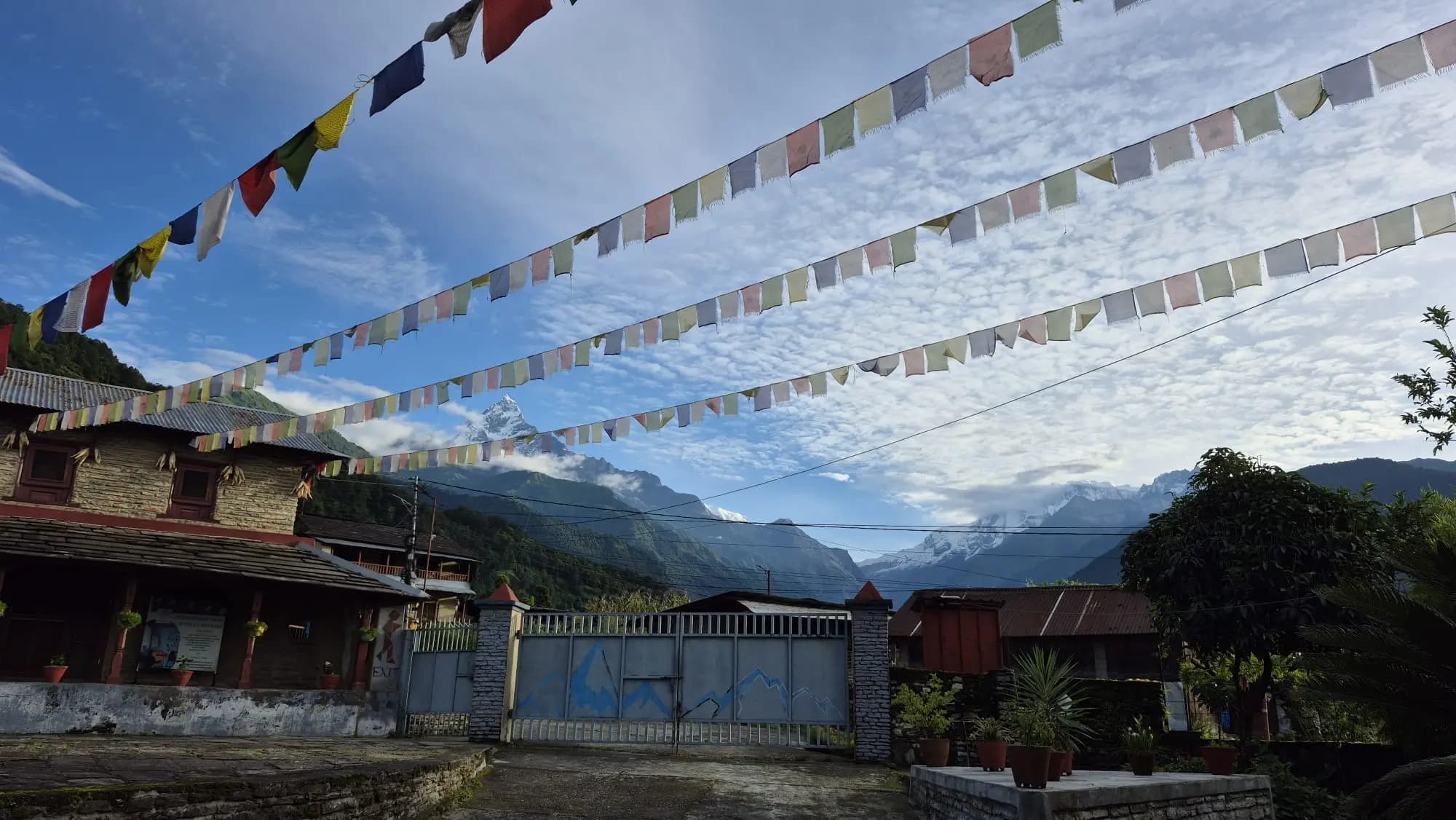
- Machhapuchhre stands directly to the north, with Annapurna South and Hiunchuli beside it
- Water runs somewhere below all year, and you can hear it from the terrace
- The road ends here, and the walking trails begin
So when we call this a nature retreat, we mean the setting is doing part of the teaching. You are not visiting nature for an afternoon and then going back indoors. For three days you sleep in it, practise in it, eat out of it, and walk into it.
Here is what that looks like day to day.
Three words tell the whole story:
| Sanskrit Term | Meaning | Why It Matters |
| Aranya (अरण्य) | Forest or wilderness | Traditionally referred to the natural setting where spiritual practice took place, away from towns and distractions. |
| Tapovan (तपोवन) | Grove or forest of austerity | Describes a secluded place where dedicated practitioners undertook disciplined spiritual practice and meditation. |
| Kutir (कुटीर) | Small, simple dwelling or hut | The Hatha Yoga Pradipika recommends that a yogi live in a modest hut located in a quiet place, away from crowds and noise, with clean water and level ground nearby. |
What nature means here, specifically
Four things. All of them ordinary rather than dramatic.
1. The practice goes outside
When the sky is clear, the morning session happens on open ground facing the range, not in a hall with a view of it. Sitting on earth rather than on a floor changes the practice in a way that is hard to argue for and easy to feel within a day or two.
2. The food comes from ground you can see
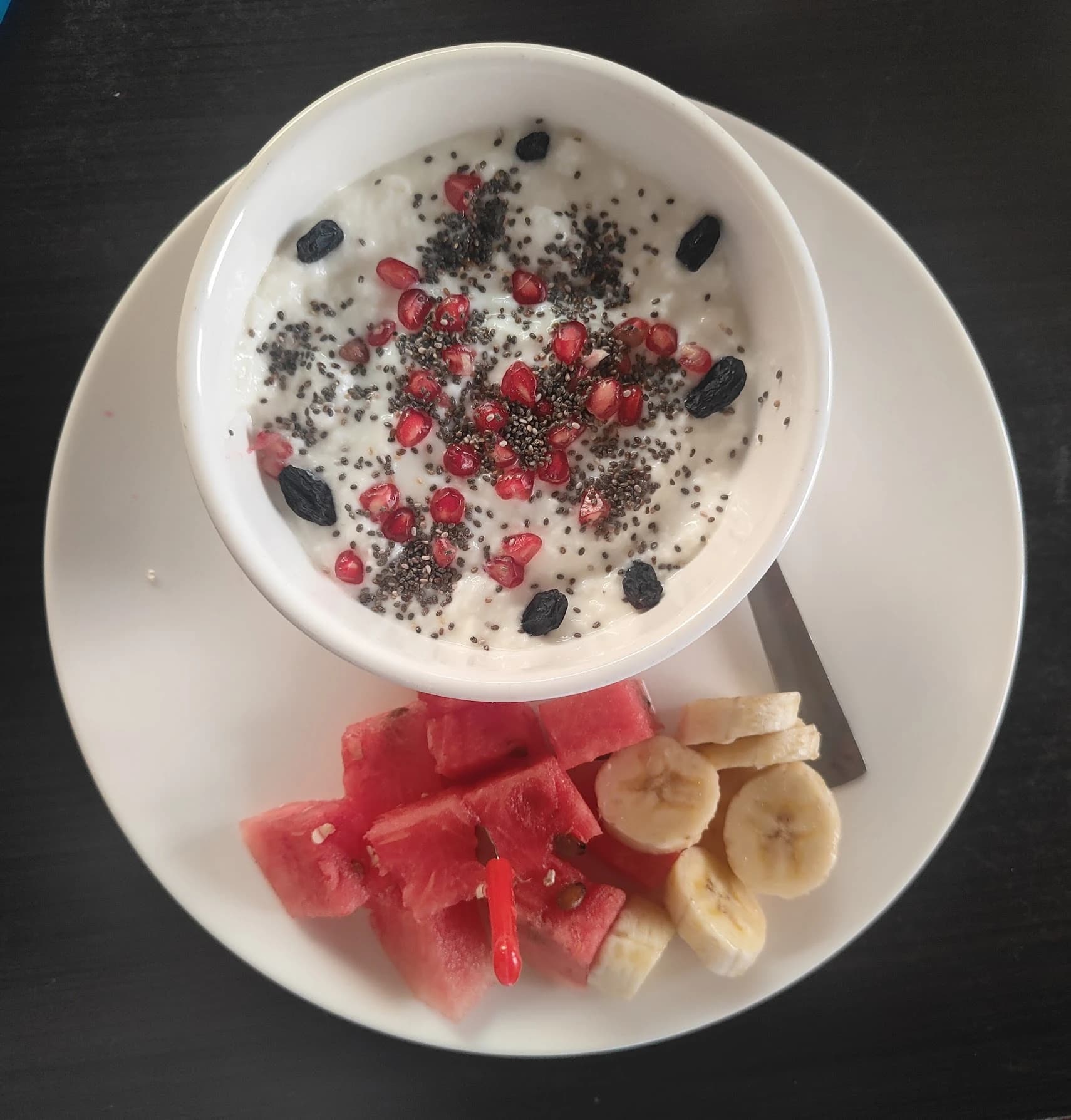
The vegetables in your lunch were picked that morning from the terraces below the building. Sattvic cooking is not only about what is left out. It is also about freshness, and the shortest possible distance between a field and a plate.
3. It is a working landscape, not a protected one
Ghachowk is a farming village. There are buffalo. Somebody is cutting fodder on the terrace below at seven in the morning. Children walk to school past the gate. This is countryside that people live and work in, farmed by the Gurung, who call themselves Tamu, for centuries.
4. The weather gets a say
If the monsoon arrives, practice moves inside. If the sky is clear at five in the morning in November, you are outside, and it is cold. Nothing here is climate-controlled into sameness. Ayurveda calls this ritucharya, arranging your life around the season instead of against it.
Where you will be
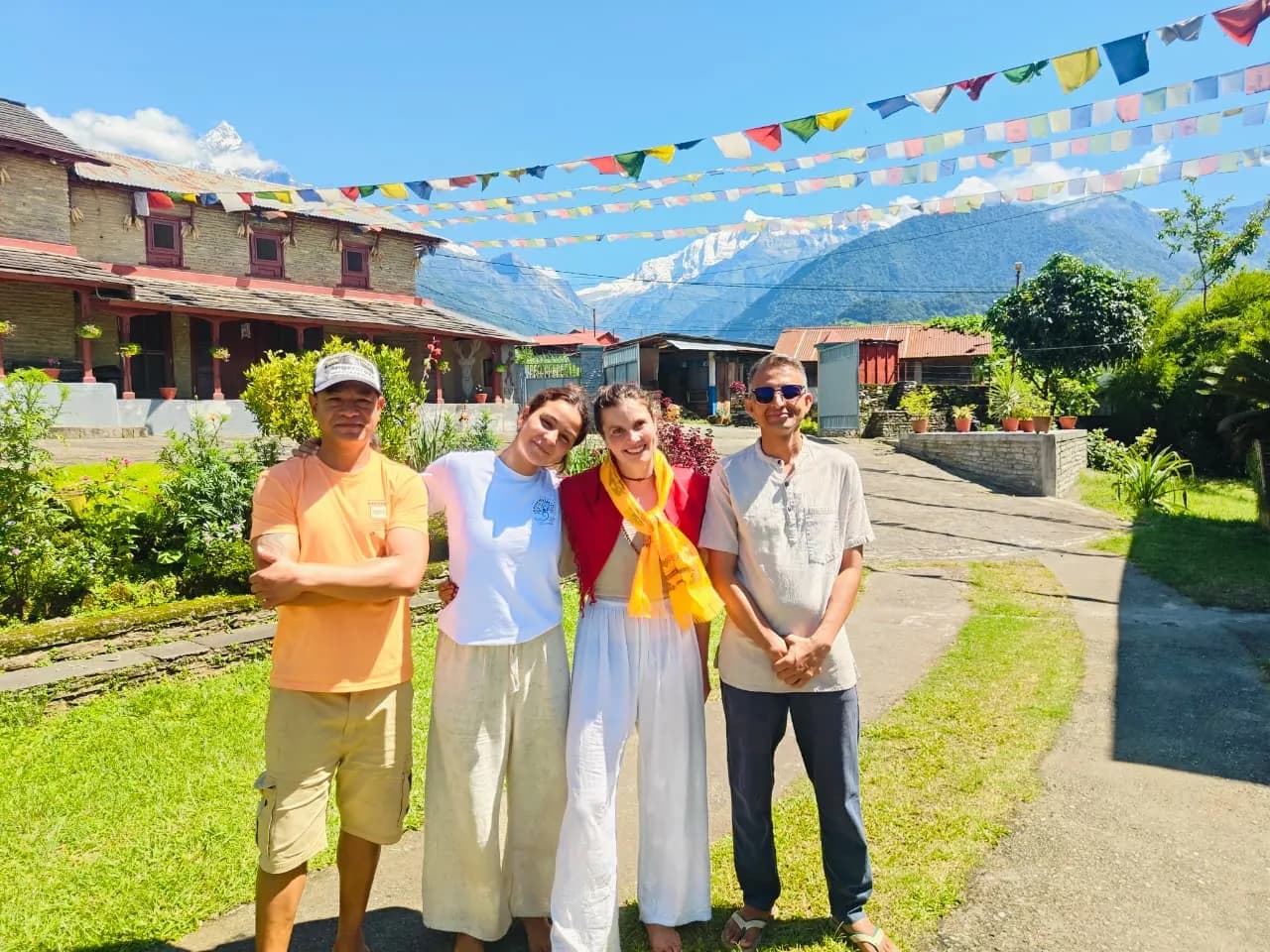
The ashram sits at 1,320 metres in Ghachowk, a Gurung farming village in Kaski District, about thirty minutes by road above Pokhara. Below the buildings are terraces of rice and millet cut into the hillside in long curving steps. Above the highest fields, oak and rhododendron forest runs on up the ridge.
The mountain in front of you
Directly north of the village stands Machhapuchhre, which most people know as Fishtail. It rises to 6,993 metres, and the Nepali government has never permitted anyone to climb it
It does not move, which turns out to matter for practice. Drishti, the steady gaze the practice uses, has somewhere to rest that is not asking anything of you.
What you will notice instead in this retreat:
- The air is thinner and much cleaner than what most arriving students have been breathing
- Nadi Shodhana feels more distinct here than at sea level
- The swing between day and night temperature is wider than most visitors expect
- Sleep is usually deeper from the first night
On three days you will notice this rather than work with it. That is honest. Three days is enough to feel the difference, not enough to build on it.
Is three days the right length for you?
Three days is a real retreat, and it is also a short one. Being straight about which one you need saves everybody a wasted trip.
This retreat suits you if
- You are already in Nepal, or already coming, and want to add something to the trip rather than build a trip around it
- You want to know what ashram life is actually like before committing two or three weeks to it
- You are between treks and your legs need a slow day more than another climb
- You have never done yoga and would rather find that out over three days than over three weeks
- You are travelling with someone whose interest in yoga is politer than yours
Book something longer if
- You want to feel a change in the body rather than in the mood. That takes a week at minimum, and the detox retreat or the standard retreat are built for it. You want depth in philosophy or the texts. Three days will open the subject and then end.
- You are coming for Ayurvedic treatment, which needs consultation time; this schedule does not have. The Ayurveda healing retreat is the one
- You want silence. Two or three days is not long enough for silence to do what it does. The noble silence retreat runs six
- You want to teach afterwards, in which case you want the teacher training, not a retreat
Ready to step out of the noise?
Reserve your seat at Bodhidham.
 4.9★ from 140+ studentsVerified
Reviews from our students
Pricing & what’s included
Everything in. Nothing hidden.
Every plan includes sessions, sattvic meals, accommodation and free Pokhara pickup. Pick the room that fits you.
Available start datesYear-round, weekly start
Shared / Couple
Sharing room
€180per person
- Best for couples & solo travellers
- Twin beds, shared bath
All-inclusive of stay, three sattvic meals, every session and free pickup from Pokhara airport or bus park. 25% deposit confirms your seat.
Cost includes & excludes6 included·4 excluded
Show allHide
Cost includes & excludes
6 included·4 excluded
Included in your fee
- Daily Hatha yoga sessions
- Daily guided meditation
- Satsang and spiritual discussion
- 2 nights accommodation on the ashram
- Vegetarian meals and herbal teas
- Free pickup from Pokhara
Not included
- International and domestic flights
- Nepal visa
- Personal expenses
- Travel insurance
The teaching team
Taught by 3 Yogis
 SwamiFounder & Spiritual Head
 DeepikaYoga & Anatomy Teacher
 RatheeshGuest Yoga Teacher
Why Bodhidham
Why choose Bodhidham?
- i.Traditional lineage-based teaching from experienced yogis
- ii.Family Environment
- iii.Organic food grown on a local farm.
- iv.Away from the city. At the height of 1320 m, Ghachowk Village.
- v.Pollution-Free Location, Best AQI.
- vi.In a lap of the holy mountain, Machhapuchhre.
Bank details & booking
How to reserve your seat.
To confirm your booking, a 25% advance of the total program fee is required. The remaining 75% is due on arrival, before the program begins.
Bank transfer
Exact bank details are shared by WhatsApp/email once your dates are confirmed.
Before you book
Frequently asked
Do I need yoga experience to join?
+
No. This is a short, gentle retreat open to all levels, including complete beginners. The daily Hatha yoga is classical and guided, covering warm-ups, asana, breathing, and relaxation, so you do not need any prior practice, flexibility, or strength.
What does the price include?
+
The retreat includes 2 nights accommodation on the ashram in a shared or private room, vegetarian meals and herbal teas, daily Hatha yoga, daily guided meditation, satsang, and pickup and drop-off in Pokhara.
Is three days long enough to feel the benefit?
+
For a short reset, yes. Three days is enough to step away from a busy routine, practise, rest, and enjoy a calm setting. It is intentionally short, which makes it easy to add to a wider trip in Nepal. If you want a deeper or longer stay, our week-long retreats give more time, and we are happy to suggest one.
What is satsang?
+
Satsang is an informal, open gathering for spiritual discussion and reflection. It is a relaxed space to talk, ask questions, or simply listen, not a lecture or a class. You are welcome to take part as much or as little as you like, and there is no pressure to follow any particular belief.
What are the views like, and is it far from Pokhara?
+
The ashram is in Ghachowk village, about 30 minutes from Pokhara, in a quiet setting above the valley. On clear days you get views of the Annapurna range, Phewa Lake, and the Pokhara valley, and meals are eaten with that outlook. Mountain weather changes, so the clearest views depend on the season and the day.
Our kitchen
Three sattvic meals, mostly from the farm.
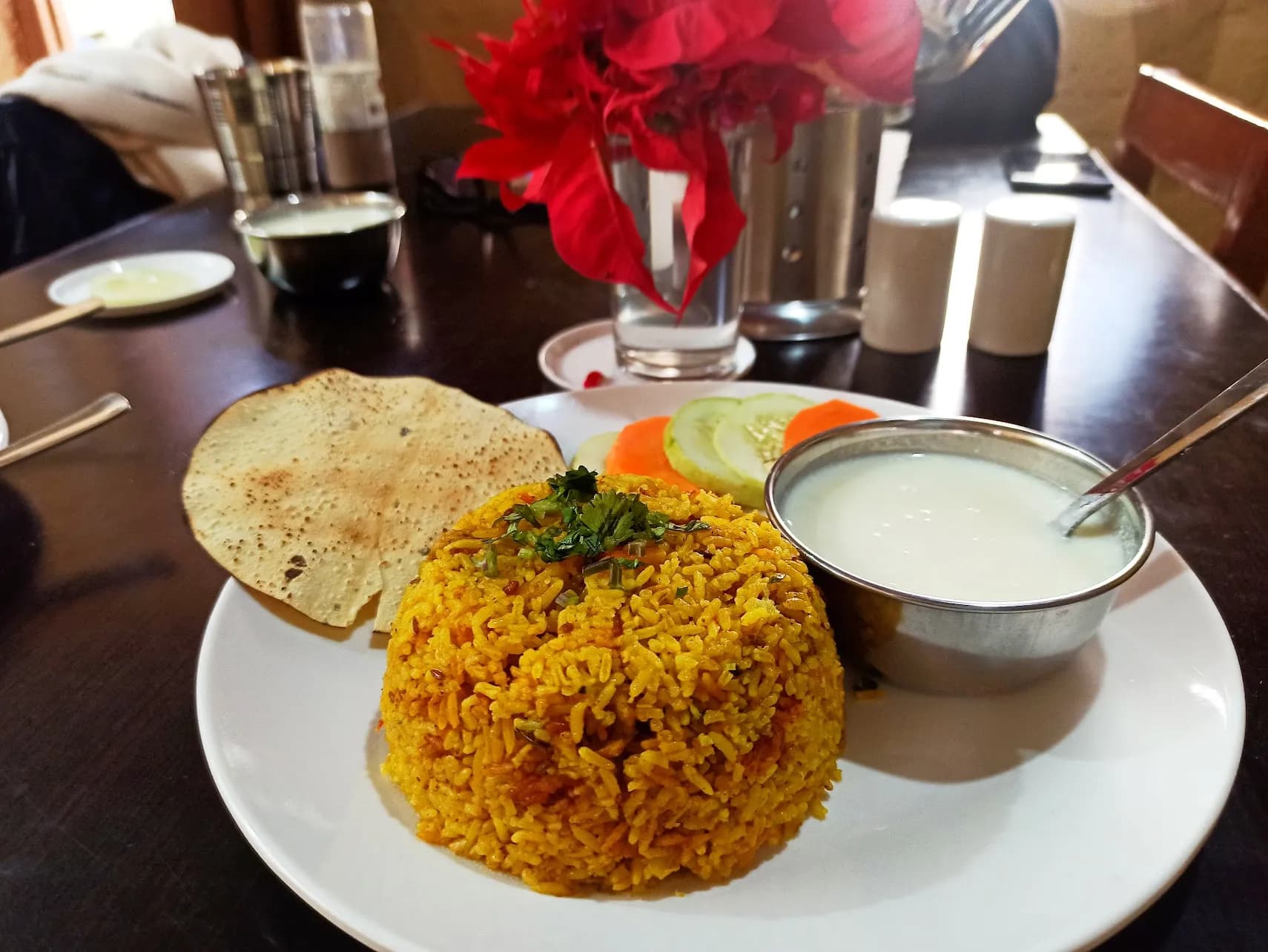
All meals at Bodhidham are organic, freshly prepared and vegetarian, following Sattvic (yogic) dietary principles. Breakfast includes oats, fruits and herbal teas. Lunch is the main meal, dal bhat with seasonal vegetables.
Dinner is lighter with soups, bread or rice with vegetables. Special dietary requirements (vegan, gluten-free, allergies), accommodated with advance notice.
- Herbal Tea: Provided With Each Meal.
- Source: Mostly own organic farm
- Meals: Three a day, included
- Special diets: Vegan & gluten-free on request

Around Bodhidham
Ashram premises and Accommodation
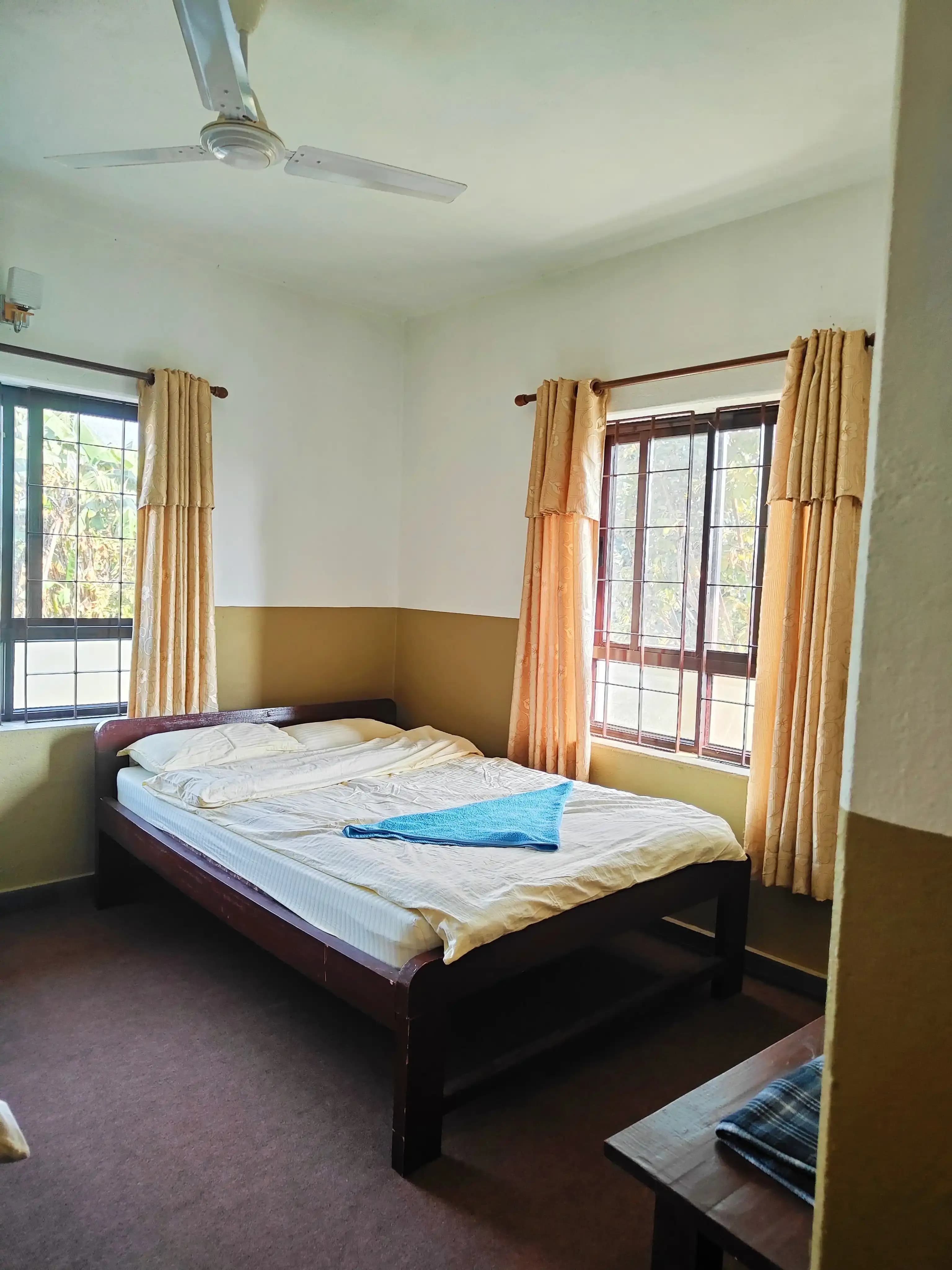
We offer you both private and twin sharing rooms by allowing you to choose what best suits for your comfort and budget.
Guided by the principle that cleanliness is next to godliness, our rooms are kept clean, simple, and comfortable with all basic amenities provided.
- Hot Water: 24/7 hot water is available in the bathrooms.
- Beds: Bedsheets and towels are changed regularly.
- Toiletreies: Basic toiletries are provided by the Ashram.
- Room: Rooms are cleaned routinely to maintain a peaceful and hygienic living space.
Know before you arriveVisa Best season What to bring Health Read the ashram guidelines
The practical side of it.
A few honest notes before you book. Most students fly into Kathmandu and either fly or bus to Pokhara, and we collect you from the airport or the bus park, free.
Visa on arrival at Kathmandu (Tribhuvan) for 80+ nationalities. USD 30 (15 days) / 50 (30 days) / 125 (90 days). Bring 2 passport photos and USD cash.
September to November and February to May are the clearest. Monsoon (June to August) is quieter and often better priced. We run year-round.
Modest yoga clothes, warm layer (mornings are cool), refillable water bottle, journal. Mat, blanket and bolster are provided.
No mandatory vaccines. If on prescription medication, bring a supply. Pokhara has good clinics; we are 20 minutes from the city hospital.
Similar retreats
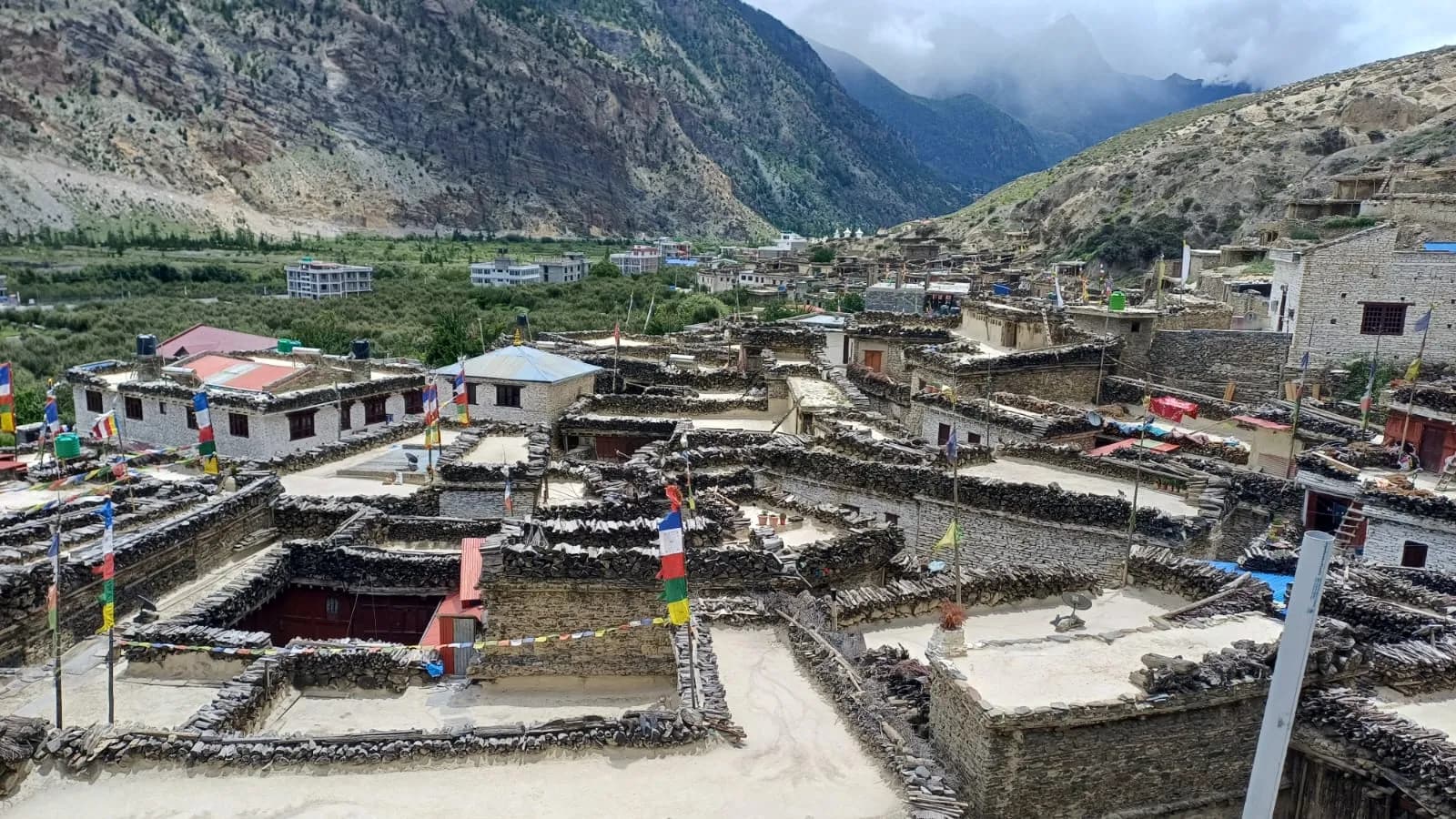
7-Day Spiritual Retreat in Nepal - Muktinath Yoga Tour
7 days€1299
View retreat →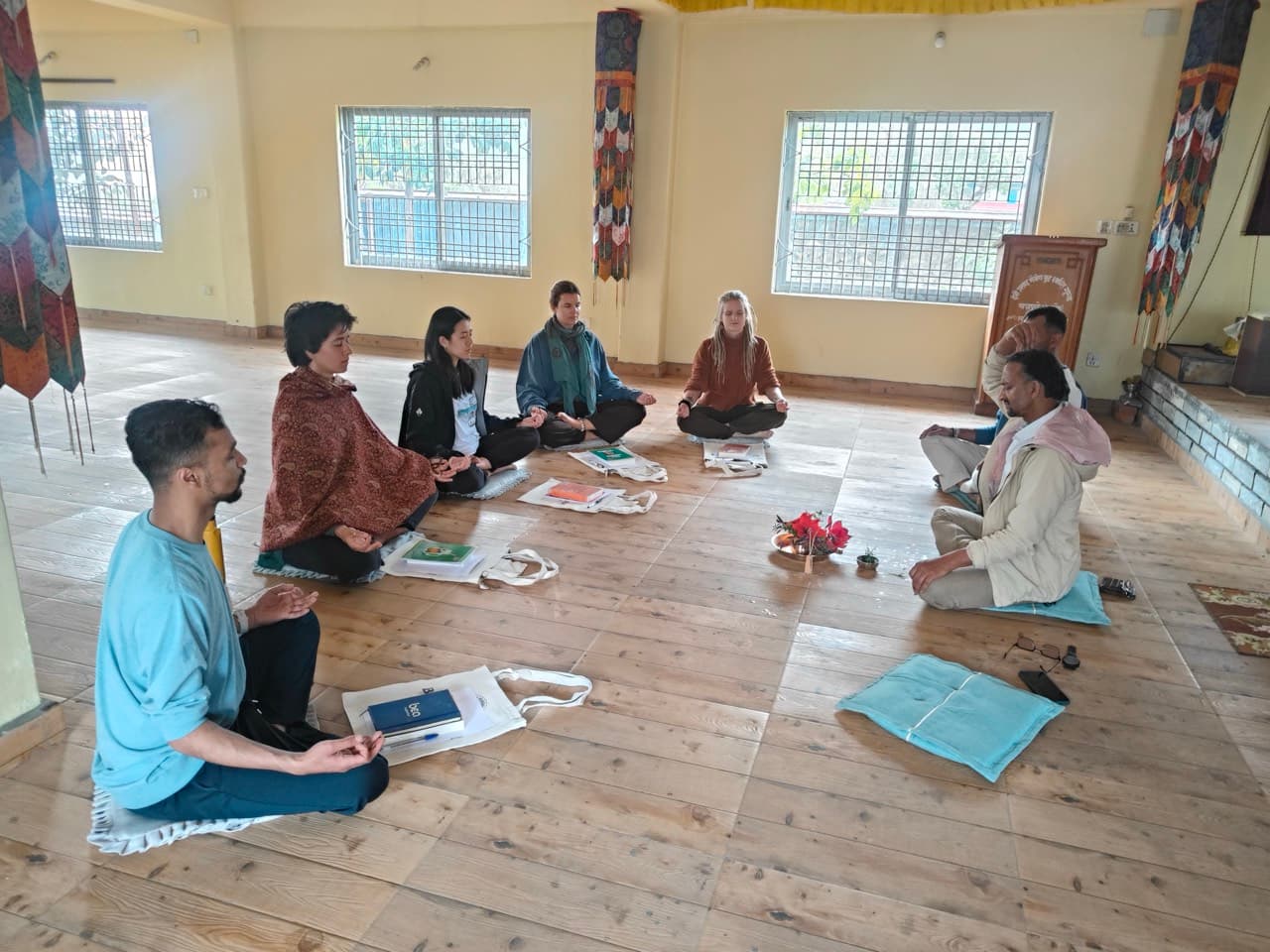
Transformative Traditional Yoga Course
3 Months€4999
View retreat →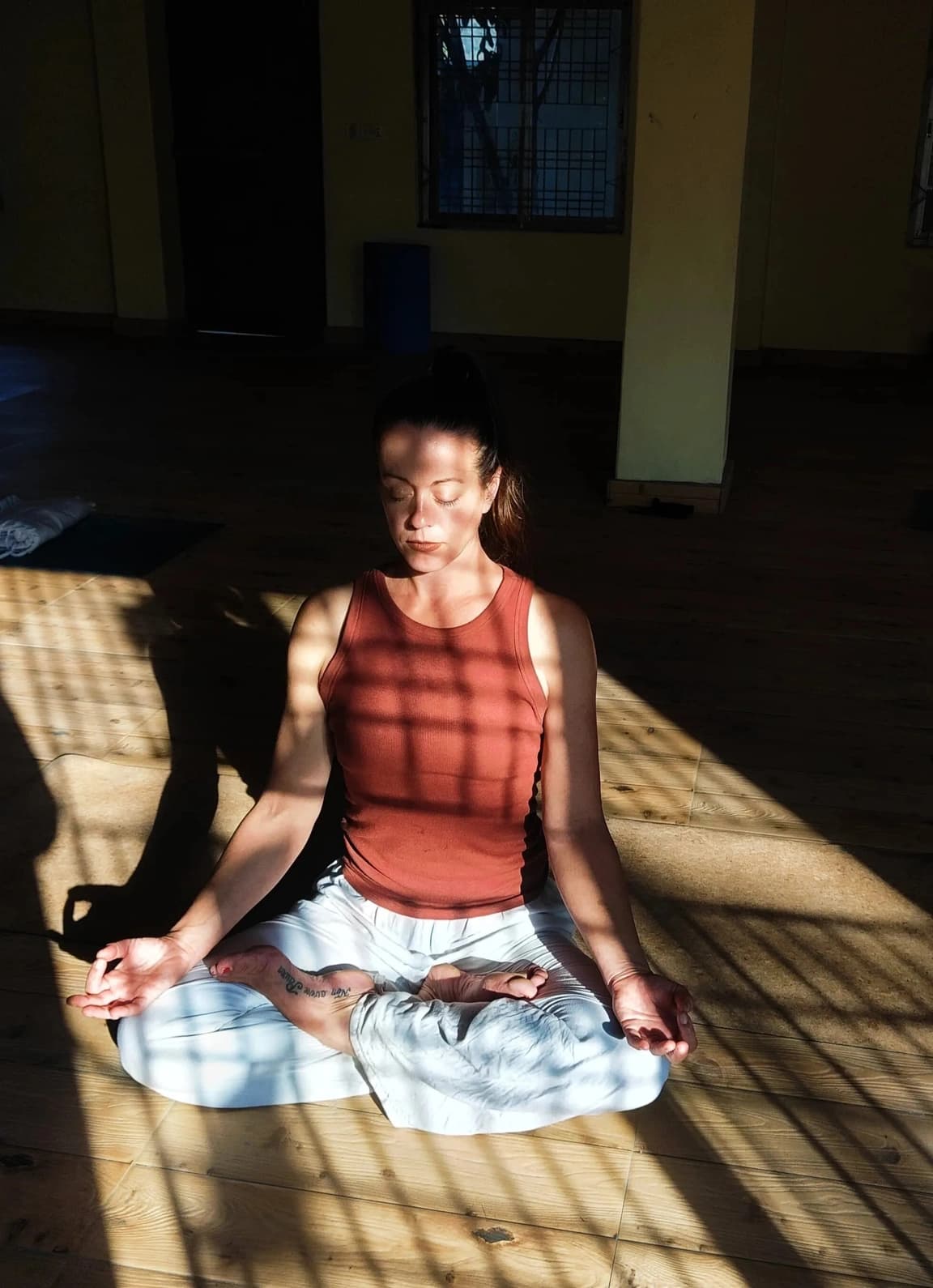
Chakra Workshop & Healing Retreat
8 days€505
View retreat →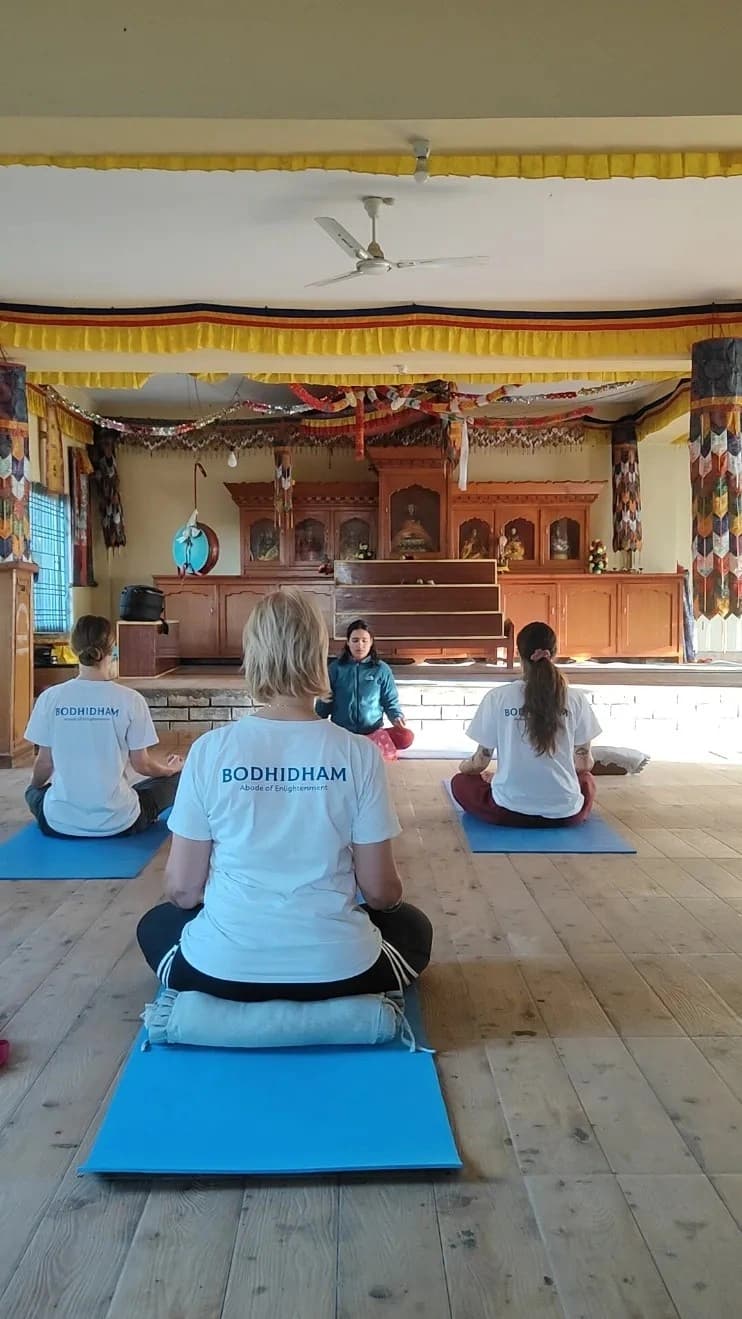
Ayurveda Healing Retreat
6N/7D €485
View retreat →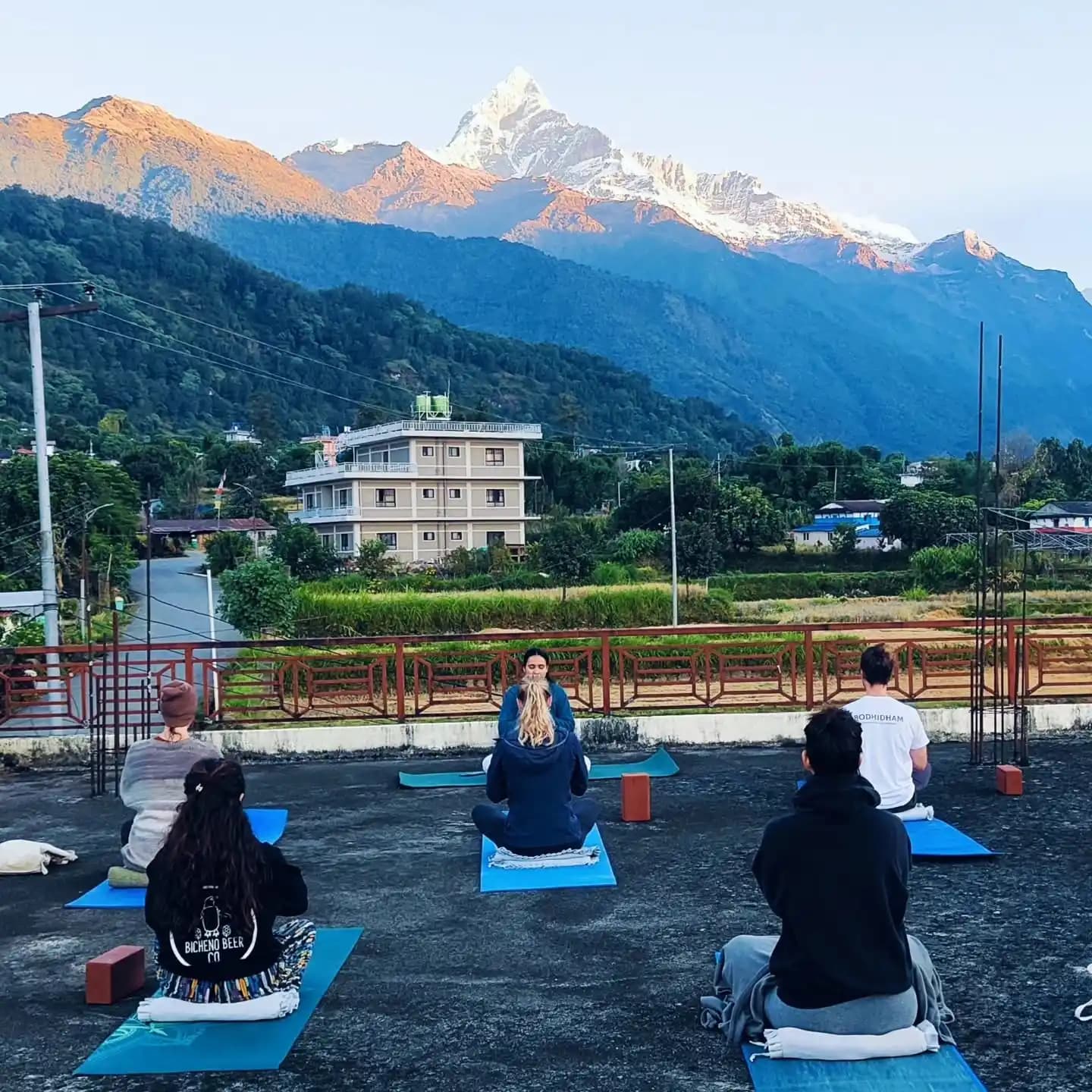
Long Term Retreat at Bodhidham
1 to 3 months€1550
View retreat →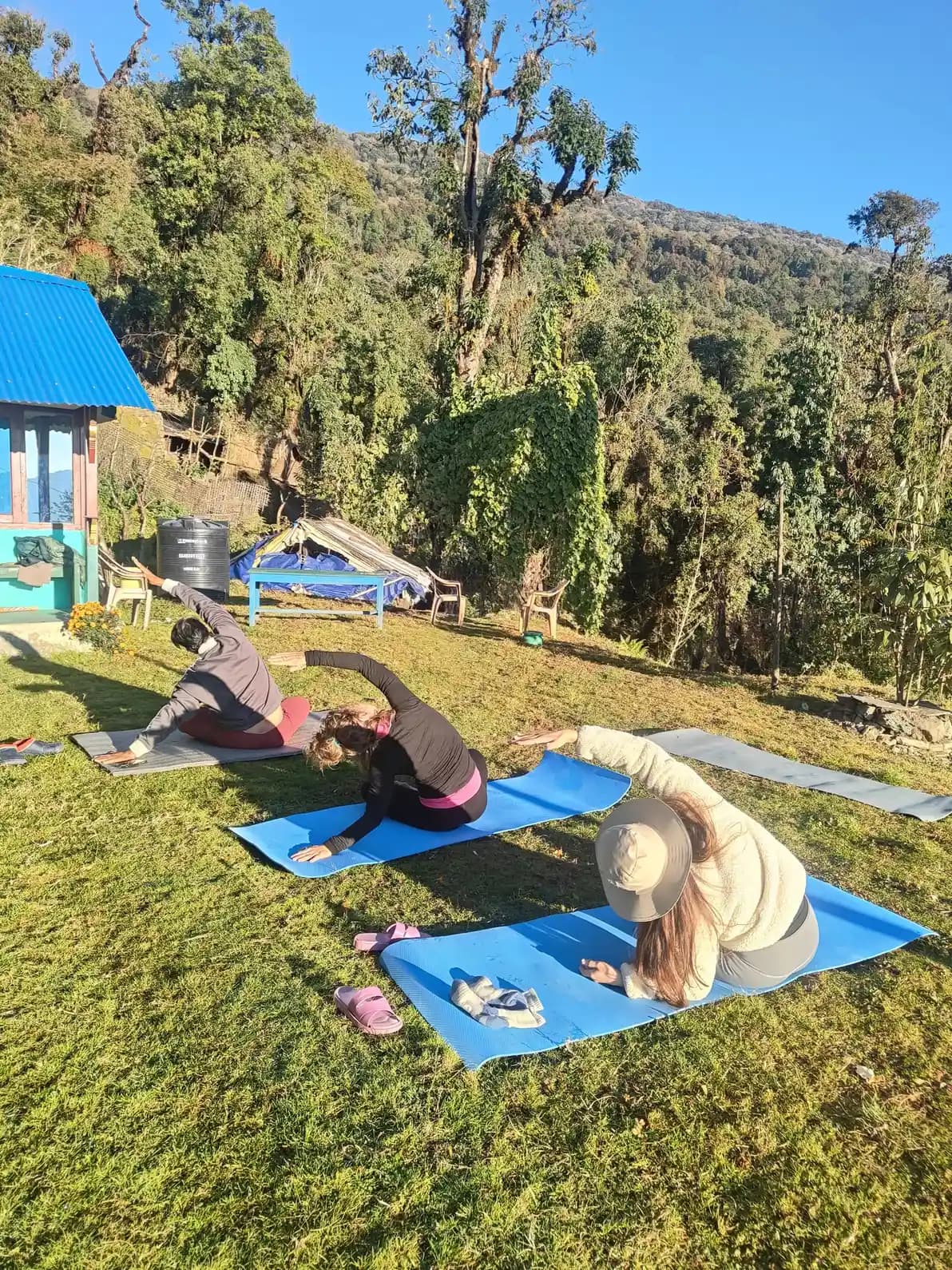
Home Stay Yoga Retreat
2N/3D€245
View retreat →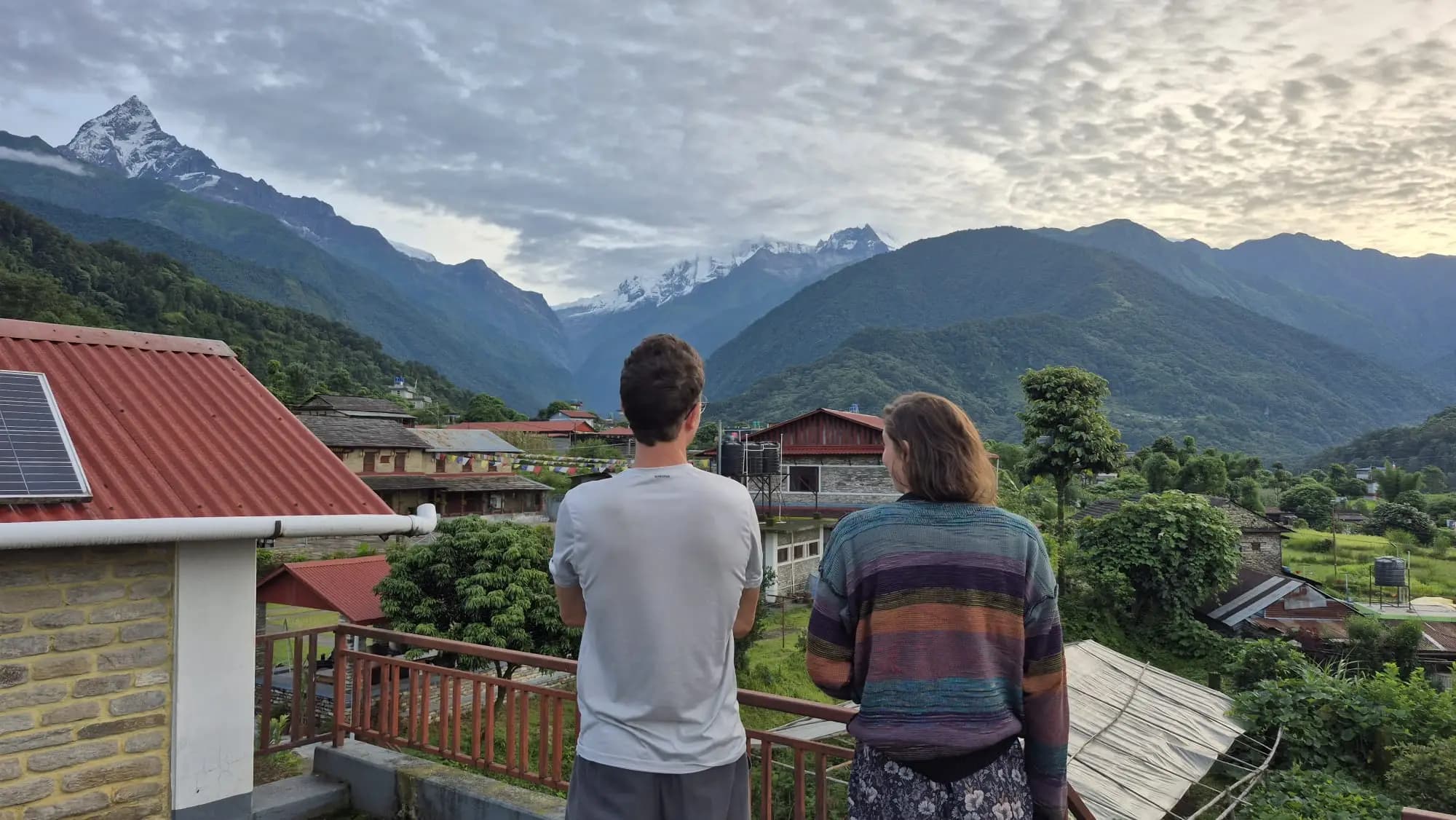
Mountain View Yoga & Meditation Retreat in Nepal
6N/7D€430
View retreat →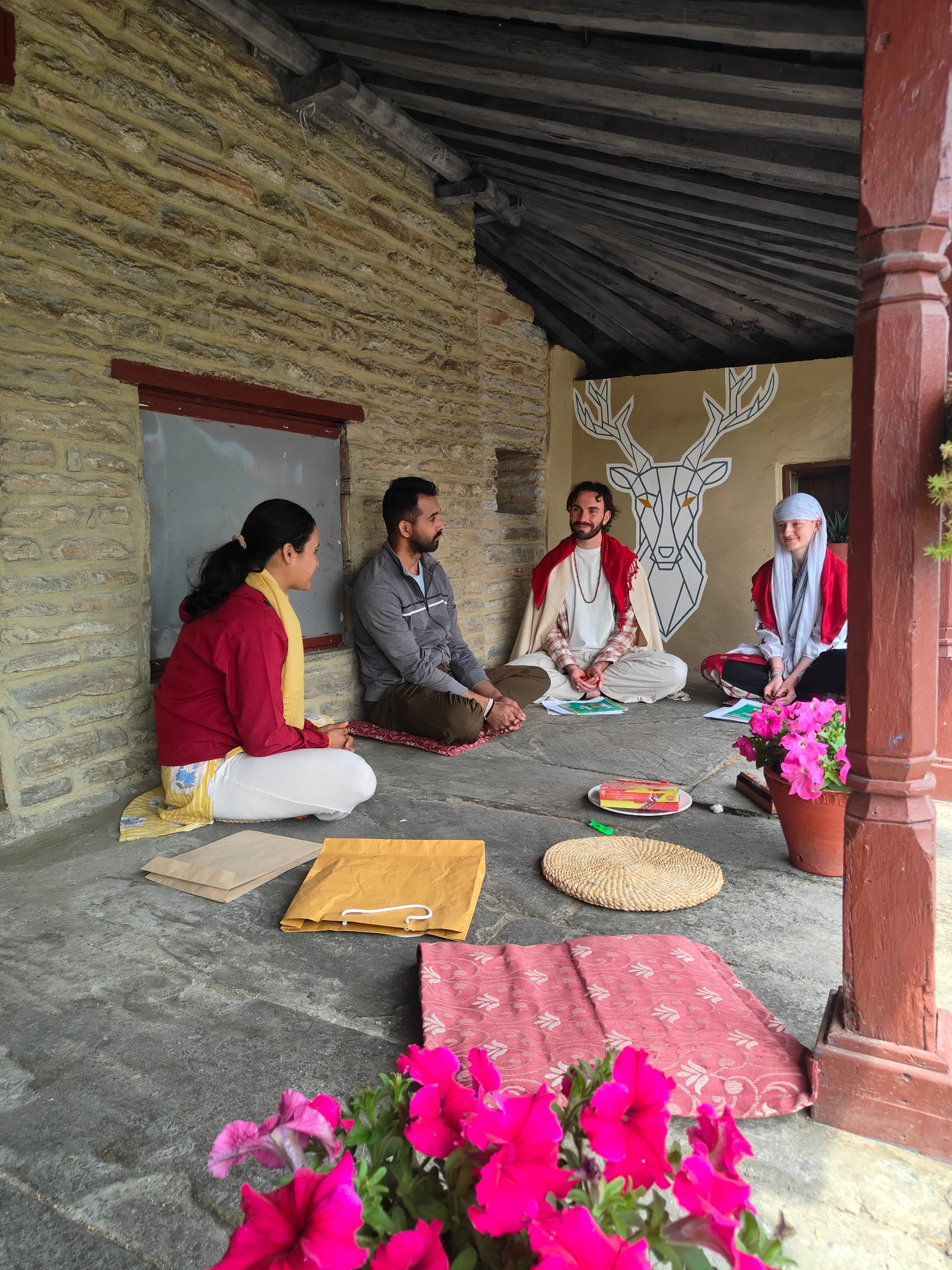
Detox Yoga Retreat in Nepal
6 nights / 7 days€430
View retreat →